


War and Peace
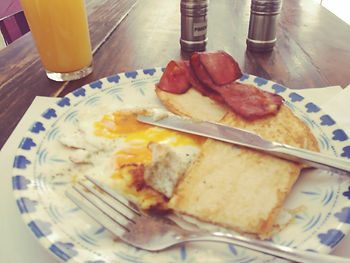
Found a massage place through airBNB experiences...it took awhile but I booked it. Also booked the walking tour in Medellin--you have to book in advance, and it only opens up 3 days beforehand. Had breakfast at The Corner--a place I've been passing the past couple of mornings--fried eggs, bacon, OJ and bread. I've noticed for some reason, when I walk into a restaurant here, I'm one of only a few people there...but by the time I leave, it is full. Maybe I'm setting trends?
Today I'm taking the War and Peace walking tour, which meets at Santander Park again. My guide's name was Hector, and the tour was INCREDIBLY informative. Sit back and let me regale you, because it helped me understand a lot of what has been going on here.
war and peace 1 war and peace 3 20191118_095814_Film4 20191118_104348_Film4 20191118_100421_Film4 20191118_104529_Film4 20191118_104537_Film4 20191118_111407_Film4 20191118_111819_Film4 20191118_114143_Film4 20191118_114159_Film4 20191118_122412_Film4
The domed statue in Journalist Park is of Simon Bolivar. Francisco Santander whose statue is in Santander Park was his vice president. This will become important later. There are four major players in Colombia: rebels, paramilitary, government/army, and the drug cartels. Fights here have always been over political differences. The conservative party typically represents the rich and powerful while the liberal party represents the common people--and Bolivar was conservative and Santander was a liberal. Santander also heavily promoted public education.
When Bolivar dies, there were 9 years of peace until 1839 and the War of Supremes (civil war). The Catholics were mad about public education taking over smaller churches to use as schools and they pushed revolt. There have been 8 civil wars total--and the country is still feeling the effects: an intolerant political society, guerilla warfare used to destablize the country, the formation of conservative/liberal parties, the loss of Panama as part of Colombia, and the politicial assasination of a liberal candidate for president who would have won (btw, there have been NO assasinations of conservative leaders EVER in Colombia).
In 1948, Jorge Gaitan was a liberal candidate who was about to become president. He walked out of his office at the same intersection from the other day (7th Avenue at 14th St) and was shot in broad daylight as he left for lunch. Riots began as the people (represented by the liberals) believed the government was behind it. Over 3000 people died, and 198 buildings were burned down in the riots that lasted for 3 days (only the church on the corner--St Francis--survived). These riots are considered the origin of violence in Colombia. The conservatives blamed the liberals for the riots and this brought dissent from 1948-1958 referred to as "the violence."
In 1961, the Dept of Agriculture tried to redistribute land to create jobs. In 1964, FARC (Forces Armadas Revolutionaries of Colombia) was created by liberals (Beles was their military leader) to use education to try and change things--to protect the people. They were considered socialists. The ELN (National Liberation Army) began during the Cuban revolution and were considered communists. For 20 years, the M-19 (Movement of 4/19/70) were students and professors who were tired of government corruption, and were non-violent until the 1980s when everything changes.
In 1985, the formerly non-violent M-19 attacked the Supreme Court and took 11 justices hostage. During the fight, they burned the Supreme Court building down (it has since been rebuilt and this is why it looks so much more modern than the other buildings in Bolivar Square). All the justices were murdered, but the country still isn't sure whose fault it was because it happened inside after police/military stormed the building. Why did the group suddenly become violent? The M-19 had signed a peace agreement while they negotiated with the government...but the government kept persecuting them and they were fed up.
The other area of change was in 1977-78 when cocaine production became industrialized, largely thanks to Pablo Escobar (yep, they don't like saying his name here either...and they really hate the show NARCOS). By 1984, the United States signed an extradition treaty with Colombia--if you were caught exporting drugs to the States, you would go to jail IN the United States--and this really scared the cartels (Colombia jails didn't scare them because they were corrupt and easily bought and paid for). Escobar was the first to speak out against the treaty (he was actually an elected senator at the time...for a whopping 3 weeks, but the other senators protested and he stepped down--this was before he became a famous drug dealer).
In 1985, he surrendered to the government, under the provisions that he would not be extradited AND that he could build his own prison (which he did). After some serious party time in this "prison," he finally escaped (he just walked out the front door and threatened the guards--and when he "negotiated" with people, he would put a bag of money on the table, alongside a machine gun...and you chose what you wanted. BTW, the machine gun was not only to kill you...but EVERYONE in your family as well). He continued his campaign of violence from there.
They finally find him in Medellin and he is assasinated in 1993. Some people think this was the end of the cocaine trade...but actually, the Cali cartel was bigger than Escobar's...but they handled it as a business and stayed away from violence which kept them out of the news. When Escobar died, the paramilitaries took over and things got much worse.
Meanwhile, FARC and ELN had been receiving money from Russia (Russia liked to have a hand in any governments that were unstable to try and convince them to their side) which stopped, thanks to the fall of the Iron Curtain. They needed money, so they began taking money from the drug cartels after Escobar died in 1993. In the 90s, FARC and ELN had 300,000 active members (the national army only had 100,000 by contrast)...and they evolved into a cartel that was all about making money (no longer trying to make things better for the "common man").
Soldiers joined under false pretenses...the organizations would offer money to help their communities until they joined, then you couldn't leave. Some were forced (including women and children) to join. With all the drug money they were making, they were now better equipped than the national army. FARC became the "government" in a lot of the country because of their control. They also controlled the roads and highways--most Colombians had to fly if they needed to go to another city because it was far too dangerous to travel by road.
In 1997, the paramilitary (AUC) was created by the government to fight back and provide security...but as soon as they saw how much money could be made from drugs, they ALSO became a cartel. They became the most violent group EVER in Colombia, using bats, machetes, etc.--far more violent than guns. In the city of Dadien, which was controlled by FARC in 1998, the paramilitaries came and pulled 22 families to the town square, separated the fathers in front of the families, called the whole town out to witness, then decapitated the fathers and played soccer with their heads, and raped and impaled the mothers, all while the children were tied to trees and forced to watch it all. In just a few years they killed more people than FARC or ELN combined--5.5 million over 7 years.
Poppies (heroin) became the third major crop after marajuana and cocaine in Colombia at this point. This creates an epidemic in the States, so we decide to get involved and offer an aid package called Plan Colombia: 5 billion dollars, better weapons/technology, and training which helps their army expand.
In 2002, Alvaro Uribe is elected and served 2 terms through 2010. In his first term, he did a pretty good job. For example, he dismantled the paramilitaries. However by his second term, the power went to his head. He knew false positives were happening, but he did nothing about it ("false positives" refers to a time when, to encourage soldiers to fight harder, the soldier received a bounty whenever he killed a rebel. This sounds good, until you realize that in order to make more money, they would kill civilians and then dress them in rebel uniforms and claim they had killed a rebel).
In 2010, Juan Manuel Santos is elected and signs a peace agreement with FARC in 2016 (for which he received the Nobel Peace Prize). He had previously worked for Uribe, so some people felt he was simply a puppet. They had attempted a peace agreement in 2014, but it was voted down by the public--mainly in big cities where only 37% of people even bothered to vote--mainly due to manipulation and propaganda. So the second time they created a peace agreement, they bypassed the public and just had Congress approve it. The agreement includes:
reparations for victims
the cessation of hostilities and use of guns
an end to the drug trade (FARC)
provisions for better rural development
offer for FARC to have a seat at the table--they created their own political party and were given seats in Congress
The current president, Ivan Duque (elected 2018), is also controlled by Uribe--he ran as a liberal, but has been a conservative since elected. The protest that is going to happen in a few days is because of some of his policy reforms and corruption among police.
And there you have it. An over-simplified version of the problems in Colombia over the past several years...and how we got to where we are.
On my way back to the airBNB, I stopped by the Santuario Nuestra Senora del Carmen--a beautiful red and white striped church. Once home, I got my laundry (which smells awesome), and played with Luna. Took an Uber to the massage--a woman in her apartment. Massage is not that big a thing in Colombia, so there aren't a lot of places to get one (that is real). It went pretty well--not as strong as I usually like, but I feel a lot better. She also made me some tea, and gave me a recommendation for a good Italian place nearby--Oliveta Pasta and Pizza Gourmet. I walked there and had a good meal (including a big salad!!) but couldn't finish. I've noticed since I've been here I have trouble finishing meals...I fill up much more quickly--I wonder if it has something to do with the elevation. It started to POUR outside, so it took me awhile to get an Uber to get home...but it turned out my driver was also a street artist, so we had a good conversation (thank you, Google Translate!).
20191118_124219_Film4 20191118_124223_Film4 20191118_124254_Film4 20191117_085556_Film4
I texted Juan David and he said I needed to leave by 6am for a 10am flight because traffic is HORRIBLE here in the morning...so I went to bed early.


Comments